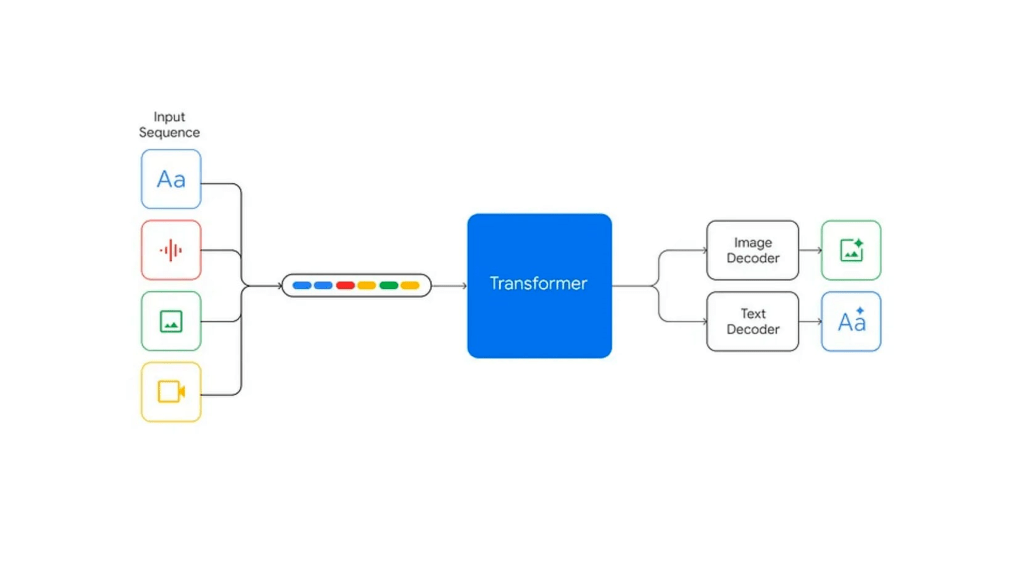
A video of Google testing Gemini, its natively multi-modal AI model, was making the rounds on the internet this week. If you haven’t stumbled across it yet, check it out below:
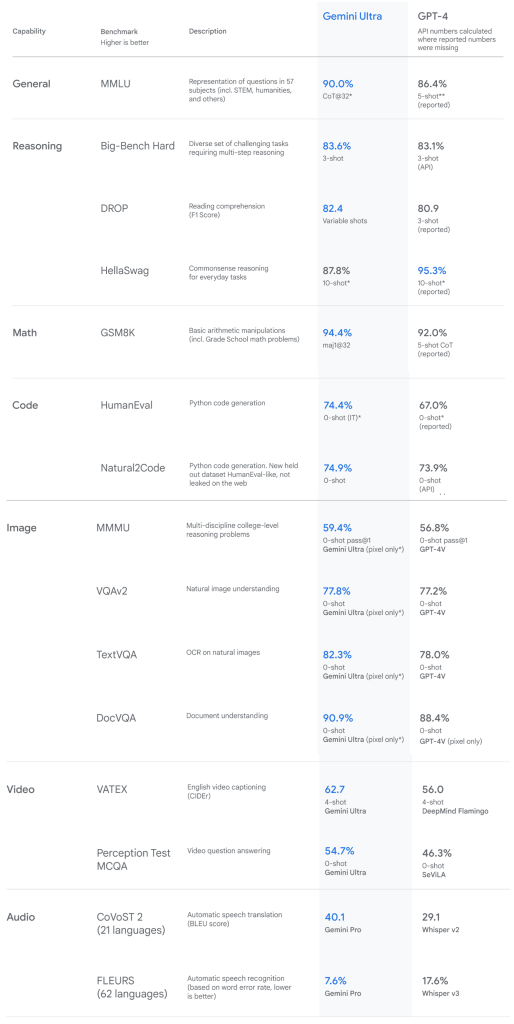
Multi-modality is what distinguishes Gemini from other large language models (LLMs). It is trained on text, images, audio and video whereas its counterparts are primarily focused on the visual or textual. It outperforms GPT-4 on a variety of tasks including reasoning, math, code, image understanding, document understanding, video understanding, and automatic speech recognition.
Yet, the most mind-blowing thing about this demonstration is how eerily close it is to interacting with another human. The seamless switching between pictures and words, the embedded humor in its responses, the concise and context-aware explanations… it is unbelievable how fast this era of AI is moving.
This naturally leads to the question that knowledge workers are starting to ask: will I eventually be replaced by a robot?
In short, part of you already has. As a species, for most of recorded history we have used technology to commoditize and automate some of the biggest components of our economic productivity. Things that were once scarce, we have made abundant through technological progress. Three of the big categories are below:
- Labor – From our hunter-gatherer and agrarian roots, labor was the scarce resource that was key to human productivity. At first, we used tools like picks and shovels to make our labor more efficient. Then steam engines and gas-powered machines. Eventually, our machines became so successful and efficient, they largely commoditized most forms of physical labor. Very few of us make our living from our own two hands these days and only a small component of overall economic output is tied to these professions.
- Knowledge – The decrease in laborers gave rise to the knowledge worker. White collar professions move around information instead of physical objects. Finding, generating, storing, processing and analyzing information became a massive part of the economy as office jobs grew into the norm. But upon the emergence and spread of computers and the internet, information also shifted from scarce to abundant. Large swaths of knowledge work, from travel agents to bank tellers to secretaries have been either significantly transformed or displaced. Even today’s telemarketing and scam calls are automated…
- Judgement (reasoning and creativity) – This is where a lot of productive value is being created today. Access to information is no longer a productivity bottleneck, finding the highest leverage use for information is. People are valued for their decision-making abilities, whether that’s a capital allocator deciding where a market is going to shift or a TikTok fashionista determining what look is going to be hot next summer. Judgement and creativity were slowly becoming the new scarce resource in the economy… that is, until generative AI came along.
LLMs like Google’s Gemini model are significantly altering the marketable value of our judgement and creativity. That’s not to say that people will not be in charge of making our own decisions in the future. Quite the contrary: we’ll be able to ‘reason’ and ‘create’ even more efficiently than ever before. Think about the proliferation of AI-generated content on the web today already, then layer on the fact that ChatGPT is only one-year old!
If judgement and creativity are the next rung on the ladder to see a wave of technology-driven commoditization, then where will our collective productive output shift to next?
I’d argue it will shift toward authenticity.

Authenticity is the output of building connection. Not ‘connection’ in a transactional sense. I’m talking about real, trust-based human connection. As AI-generated content and decision-making becomes abundant, authenticity will become the new scarce economic resource and the ability to connect will be the new highly sought after skillset.
Examples of this taking place
There is nothing that illustrates the value of authenticity more than handmade products. U.S. craft breweries had a 5.0% share of the U.S. beer market in 2010. That number has climbed to 13.2% today, and for good reason: it is enjoyable to support the local brewery in the neighborhood. They produce unique products. They welcome dogs and babies into the brewhouse. They have live music and host open mic nights to bring the community together. They produce small-batch organic brews. But they win because they also produce small-batch organic connection.
Similarly, each of us has an authenticity filter, and we get a lot of practice using those filters through the daily barrage of advertisements and influencers. We have all come across out-of-touch advertisements or someone spamming our social feeds fishing for attention. It is incredibly easy to sniff out when a company or an individual is not being genuine. But for those that are proficient at connecting with their audiences, brands are more trusted, advertisements are more viewed, content is spread more widely. Authenticity is an economic amplifier.
Beyond brewers and creators, authenticity is also important in the corporate world. I’ve heard many people argue otherwise, but corporate executives are some of the highest value creating people in the world. That is because of the high degree of leverage built into their work. Not only do they control capital and resources, their decision-making and strategizing influence the outputs of dozens, hundreds and sometimes thousands of people. But remove their authenticity and their ability to connect, and say goodbye to that leverage as well. A leader who is not followed makes an ineffective executive because their ability to ‘execute’—that is, to create value through their judgement and decision-making—has been extinguished.
Authenticity and connection can help uncover new market opportunities
Authenticity is also key product development. The last Paper & Blocks post covered the most prominent jobs-to-be-done for retail investors. Here are the TLDR big categories:
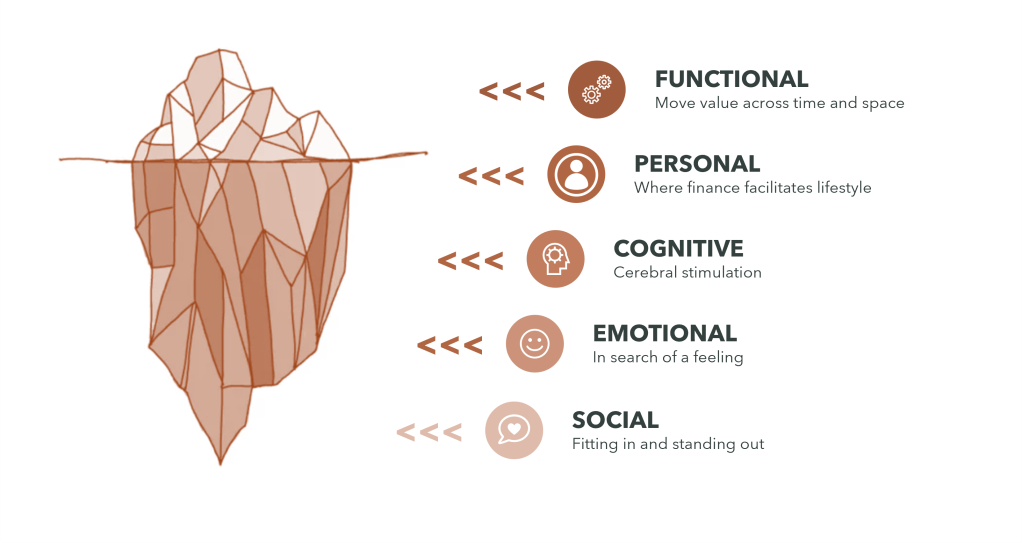
It is easy to commoditize solutions for the jobs at the top of the stack (the functional and the personal). But further down the list, commoditization becomes much trickier. When it comes to solving for social and emotional jobs-to-be-done, authenticity starts to matter more and more.
Confirmation Bias at Work
I wrote this post on a whim in a single sitting on a Wednesday night. Sure enough, the content I consumed on Thursday morning was full of mentions of ‘authenticity’.
On The BetaKit Podcast Channel, the Thursday morning episode featured Sarah Stockdale, founder of growth marketing program Growclass, who made an excellent point that authenticity is something people are starting to crave in their brand interactions:
“There is an era of marketing that we all got a little lazy in,” Stockdale explained. “…We could basically find our customers on four platforms and just dump money into advertising and optimize for conversion, and hire really smart demand gen marketers. That’s not working anymore. Customers today crave personalization and authentic community and are migrating to other platforms that cater to these needs. We are desperate for authenticity, and that causes a problem for companies, because we can’t track people when they go out of these town squares.” Brands have reacted to this challenge by intensifying their efforts, turning to Large Language Models to generate content in an attempt to capture as much attention as possible. This has led to an era of overwhelming noise, according to Stockdale, and for brands aiming to genuinely connect with the right audience, the first step is to “stop shouting at them. We can’t overcome the noise with more noise.”
Jim O’Shaughnessy’s latest Infinite Loops episode with Eric Jorgenson (which also dropped on Thursday morning) touched on the topic, suggesting that attention and brand loyalty has to be earned now, instead of bought:
Marketing, in my mind, is now competing directly, head to head, for attention and trust with media companies, whether that’s Netflix or an individual creator and the TikTok algorithm. How are you as a brand going to sit there and buy ad time, attention and interest from your audience when you’re competing with somebody [a creator] who’s winning the war for attention based on pure merit…
As a creator, I think it’s important to start with something that’s authentic to you so that you have sustainability and connection with the audience. But if you’re being authentic to who you are, there is almost certainly a business whose values and product jives with who you are collecting and the message that you’re giving them.
I also learned from this episode that Merriam-Webster’s Word of the Year for 2023 is authentic. Their reasoning: the line between “real” and “fake” has become increasingly blurred across society.
And finally, in the last podcast from Thursday morning I’ll mention, Dr. Daniel Crosby who hosts the Standard Deviations podcast talks about how connection and authenticity play an outsized role in why we select and hire financial advisors:
Accenture came out with this study last year that asked people what do you want out of your relationship with your financial advisor. The number one answer was ‘someone who gets me’, the number two answer was ‘someone with whom I share values’, and the number three answer was ‘someone I can hangout with socially’. It’s fascinating to think about this. This is what people are looking for in a financial advisor, and they are looking to be listened to, to be understood and to be connected with. They aren’t looking for advice on muni bonds or a forecast for the S&P. They want a friend who knows about money. So in a very real sense, being able to address these psychological needs is why financial advisors get hired.
Authenticity is already a scarce resource
Dr. Crosby also mentioned this in his episode:
Have you ever come across the saying that “the world has never been more connected, and people have never felt more alone”. The media has even gone so far as to dub this the loneliness epidemic. Even the Surgeon General of the United States put out a warning about the the public health crisis of loneliness, isolation, and lack of connection in the country.
Connection is already scarce in our economy and it will become more so as AI amplifies the trend.
As labor, knowledge and judgement get further devalued by continued technological progress, authenticity presents the next rung on the ladder for us to stand on… at least for a little while.

 Paper & Blocks